“It is no exaggeration to say that more has been learned about languages in the past twenty-five years than in the earlier millennia of serious inquiry into language.”
Berwick and Chomsky (2011: 29)
Is this true? I know many biblical scholars will scoff at it. But think about it for a moment. How could this statement fail to be true, of any field? Take biblical studies. Do we know more about the Bible today than say, the year 1411? Of course. What about 1800? 1950? Well, yes: We know more about the biblical languages, we have new data (we discovered Ugarit and the Dead Sea Scrolls), we engage in serious study and comparison of cognate literature, etc. Would any biblical scholar disagree that we know more today about the Bible than at any other period in human history? So why not language science? We have more data, from more languages, which more people study, in more ways than ever before. The quote above is not only true, it is a truism.
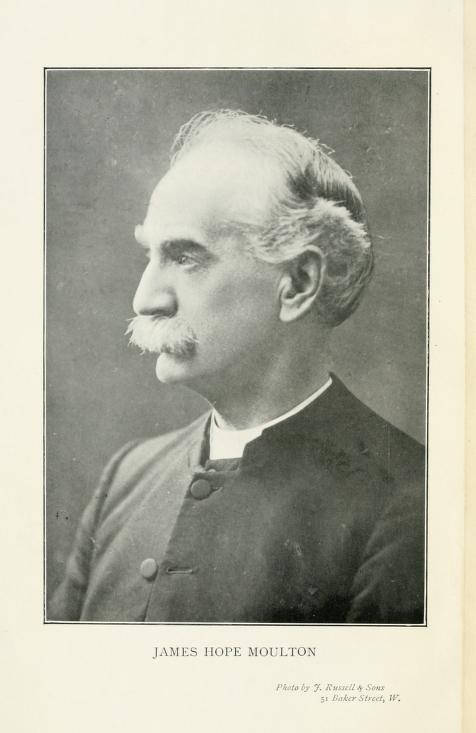
Biblical exegesis needs linguistic theory. Biblical exegesis is a species of linguistic analysis, and linguistic analysis only has explanatory power if it is accountable to all the data, otherwise it is ad hoc. And yet linguistic theory is still treated with hostility by some biblical scholars. This makes for a strange situation. Can you imagine a field where scholars ignore a sister discipline because they already practice an ancestral version of it? I love the philologists of yore. But they would not be relying exclusively on their own books if they lived today, and they certainly wouldn’t ignore the last century of linguistics. The best scholars today don’t do it. I can’t imagine Robertson or Moulton ignoring advances in Modern Greek linguistics. They didn’t even do it in their lifetime.

a 1000 page Greek grammar
Recently, I submitted an article about an interpretive issue to a very prestigious biblical studies journal. It was rejected because in the article I “imply linguistics is uniquely revelatory for exegesis.” I’ve thought a lot about that statement. I do not know what it means. The reviewer said the conclusion was sound and it had no other scholarly flaws. Yes, I know what you’re thinking: rejection is frustrating, but it is often needed (Lewis: “Experience: that most brutal of teachers. But you learn, my God do you learn.”). And that is true. But I think the peer review was not worth much in this case. In the last two years, I’ve received some version of this criticism on four separate occasions. In each case, I was left wondering what, if anything, I could do to improve the article. The fault seemed to be simply that the article was not the style of scholarship the reviewers use and appreciate, or understand. In other words, it had the wrong audience. As witness to this fact, I simply added a few footnotes and sent the articles to a specialist publication. In both cases I had immediate success. But we should ask ourselves why biblical scholars are the wrong audience in the first place. Biblical studies is a text-based discipline. Linguistic analysis is inevitable in biblical studies. And yet the science behind such analysis, modern linguistics, is often unwelcome.
[N]o matter what developments may have occurred within linguistic thought…there continue to be those who model these traditional forms of grammar in their work. Most do so unknowingly because they are simply unaware of the history of the development of language thought… But some of those who persist…are aware of such developments and continue nevertheless. Their persistence is less understandable, as they recognize that there are alternatives, ones that directly address the language issues that they are confronting. . . these models of language, which arguably have been superseded in subsequent linguistic thought…remain, inexplicably, foundational within New Testament studies, providing most examples of beginning New Testament Greek grammars, several of the intermediate Greek grammars, virtually all of the advanced reference grammars, and even monographs that continue to be produced.”
I was warned when I began my PhD that doing linguistics in biblical studies can be frustrating. Some scholars will reject it as novel or too complex. Others will misunderstand it. And if you do find a scholar who uses linguistics in their work, you may encounter the Dunning-Kruger effect. This problem cuts both ways. I’ve had biblical scholars level bizarre criticisms at my work (one reviewer claimed without argument or evidence that two linguists at MIT were simply wrong!), and I’ve had others praise what isn’t there (thanks, I’ll take it?). One strategy I have tried is to document everything I am claiming clearly from English. I assumed scholars would appreciate that their intuitions as native speakers can guide them through discussion of a complex issue in linguistics. Instead, I have been accused of conflating Greek with English, a problem I have actually published about.
This experience has not been mine alone. There is a small group of us trying to do serious linguistic work in biblical studies. We’ve all had the same experience. A friend wrote me just last week and said his article was ‘revise and resubmit’. The reason? Not enough German commentaries were cited. Friends, there is not a single commentary in any language on the planet that discusses the issue he was addressing. I personally went through forty years of Matthew commentaries recently for a paper. Despite the fact that a mountain of linguistics literature had been written since the 1970s on the particular issue I was addressing, not a single scholar was aware of any of it. I’ve been told on more than one occasion by others in this close circle that they have stopped reading commentaries for exegesis in the original languages. The gulf between linguistic analysis and the type of philology practiced in these commentaries is vast. Many (if not most) topics are left unexplored. When was the last time you cracked open a commentary and read a discussion of modal nouns, unconditionals, propositional attitude reports, or scalar adjectives? And yet they’re all in the New Testament! This gap is even worse in discussions of translation. Yes, I understand commentary series need a business case, and technical linguistic analysis won’t exactly attract the masses. But if we are interested in the truth about the Bible, we cannot afford to ignore this literature altogether.
One reason for the hostility, if we are honest, is that linguistic theory is often put to strange purposes in biblical studies, and it operates as a specialist silo. Some scholars seem to have caught onto this fact. I had one scholar ask me: “Can you name one way <very important linguistic theory™> has changed the translation or interpretation of any text in the New Testament’?” It’s a good question. In other cases, I have had scholars tell me that they ignore linguistics because “there is no agreement.” Of course, that is equally a reason to ignore quantum mechanics (and most of biblical studies?). Like theoretical physics, linguistics is a modeling science and total uniformity is a naive expectation. But if we listen closely, there is an important lesson buried in these criticisms.
As much as I applaud efforts to apply linguistic theory to biblical exegesis, it seems to me this project has five problems:
- Meet the New Boss, Same as the Old Boss
- We can be guilty of simply repackaging traditional philology in new nomenclature. We rename grammatical phenomena, or apply elaborate technical concepts to well-known issues, but it does not advance our knowledge of the languages or interpretive issues in the text. In some cases, we falsely claim to have made an important discovery, when a Level 10 boss philologist from the 1880s knew it quite well. Always check the Level 10 boss philologists from the 1880s.
- Look, A Shiny New Theory!
- We can become so excited about a linguistic theory that we end up using the Bible to talk about it (rather than studying the Bible with it). You’ve heard this paper at SBL: 90% theory, 10% data. When I handed in my first piece of writing to my supervisor, a philologist of the old school, he wrote back: “I find this pointless.” He was right.
- Sometimes scholars use theory to debate theory, and the Bible just seems to have got caught in the crosshairs. Scholarship of this kind makes linguistics look like another fad. Perhaps scholars aren’t wrong to assume that strong claims based on linguistic analysis are dubious, if this type of work is all they’re familiar with.
- The Theory is Irrelevant, Dated, or Misapplied
- Scholars treat linguistic theories like meta-narratives that can be dropped wholesale onto the Bible. But it is not clear what, if any, difference the theory makes. Does the theory really advance our knowledge of the Bible in any way? Are we just talking about ideas that we find cool?
- In some cases scholars speak of ‘linguistics’, or multiple entire fields of it, supporting their argument. Really? All of linguistics? Multiple entire fields? A statement like this would never come from a linguist. It doesn’t make any sense. It’s like going to the zoo to find an animal. Which animal?
- On that note, scholars sometimes discover a field (‘Gricean pragmatics’) and rush to apply it to the Bible, unaware that five decades have elapsed since it began. Another problem is cherry-picking the literature for ‘insight’ into a problem. Both leave major obvious gaps in analysis, practice subtle misunderstanding of the literature, and end up rehashing defunct debates. One scholar told me that the linguistics practiced in biblical studies is still decades behind the state of the art. This may be why.
- Theory can also be misapplied. I heard a biblical scholar respond to a paper recently. The paper was outstanding. The author was trained as a linguist, analyzed the data closely, weighed in on a decades-long debate, and issued a clear judgement. The response? ‘Yeah, but what about <this other theory>’? It betrayed a complete misunderstanding of how linguistic analysis work (and I knew listening in, that the respondent didn’t understand the theory in question, either!).
- Poor Philology? Slap Some Theory On It!
- This is probably the largest concern from the philologist of the old school. And if we are honest, it is brutally true. The linguistic analysis may be dense, but otherwise elementary mistakes surface when handling the language itself. I witnessed someone give a paper at SBL, dense with thick academic terminology from linguistics. Afterward, a senior scholar stood up and said, ‘This is all nonsense.’ And proceeded in about 30 seconds to dismantle the entire argument. We cannot forget that theory comes after language mastery, not in replacement of it. Of all the scholars I have met, the best shared one trait: encyclopedic knowledge of the data. They could cite texts in their original languages from memory. That’s how well they knew the data.
- Basic Topics in Linguistics Are Not a Kuhnian Revolution
- First it was speech acts, then it was verbal aspect, then valency, and now it is metaphor. These and other topics are treated as cutting edge ‘theories’ in biblical studies. I suspect some of these topics are popular because using them doesn’t require much training in linguistics, and they have practical application. That is not a fault. But the truth is that none of these topics are cutting-edge. In fact most of them would have been learned freshman year of a linguistics degree. Using them in our research doesn’t make us cutting-edge scholars, and we can be led astray if we rely on other biblical scholars to explain them to us.
Criticisms like these are fair, in my estimation. The philologists of the old school have a point, and we should ask what impact a linguistic theory actually makes to biblical exegesis or translation. We should avoid fads, show our work, and write clearly. Having admitted that, we should also be aware that theory can protect us from folk philology, which is a very real problem in biblical scholarship. We’ve all read this stuff: ‘the logos was toward God’ in John 1:1; עֵזֶר כְּנֶגְדּוֹ means ‘strong rescuer’ in Gen. 2; κεφαλή in Eph. 5 is not about authority, etc. It is obvious in most of these cases that the interpreter is up to something else, and it is not sound philology. Linguistic theory would help us see that.
Some of you are thinking, yeah, but linguistic terminology is complex and unfamiliar. True, but remember: the terminology in biblical studies was once unfamiliar to you too. As James Barr writes (1968: 39): “We would do wrong if we…imagined that modern linguists had introduced a complex and lengthy vocabulary into a subject which had previously been free from terminological complexities and inconsistencies.”
At the very end of my PhD, my supervisor died. I had a choice. Although I had a co-supervisor in the linguistics faculty, she did not know the languages I was studying. The question was whether I should proceed alone, or try to find someone else to read my thesis. I chose the two best philologists I knew, and it made all the difference. Linguistic theory and sound philology are not a zero-sum game, and biblical studies as a discipline should reflect this fact.
 Koine-Greek